ReLife

Field notesIndia, after the harvest

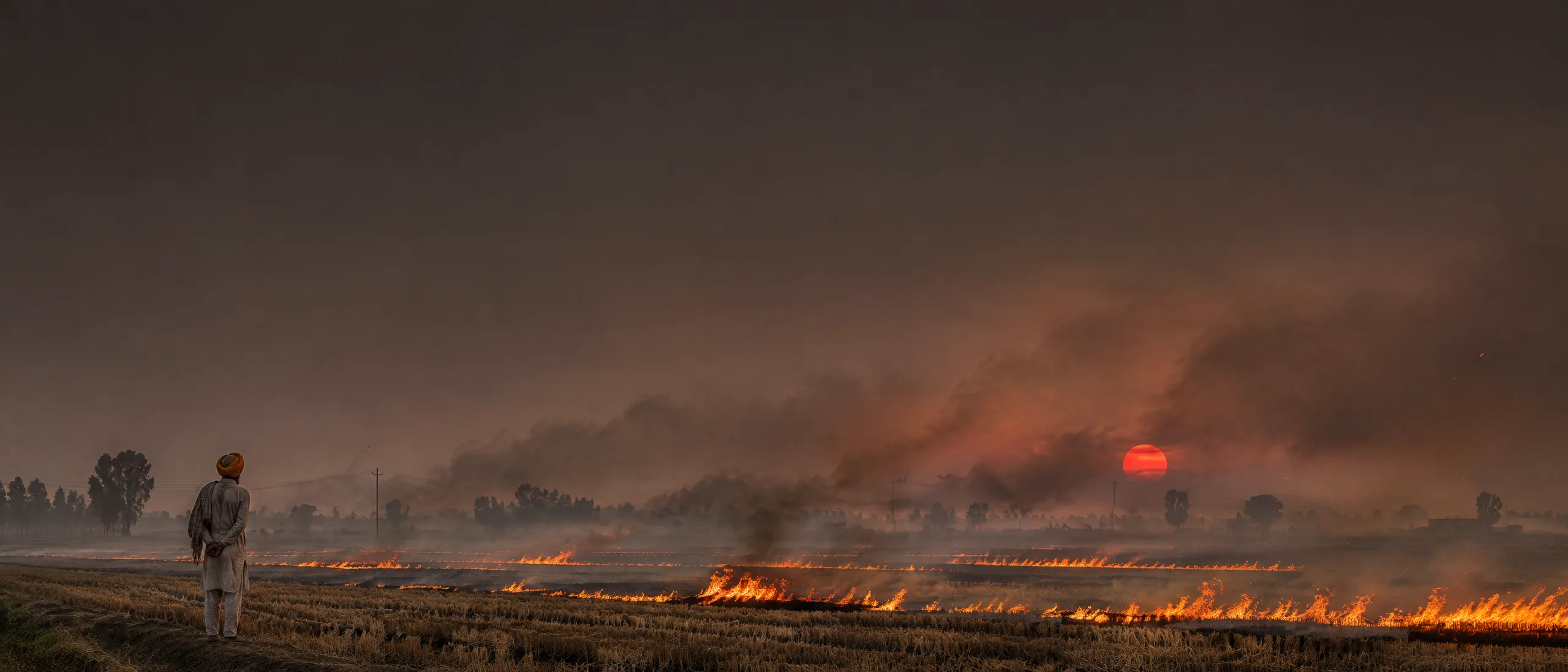
A harvested field burning at dusk. Lines of fire cross the stubble, smoke fills the sky, and a lone farmer stands at the left watching under a red sun.

A field report · India

Turning what burns today into what grows tomorrow.

Fig. 1 Dusk. The stubble is set alight to clear the field.

The report

End crop burning. Save lives. Restore the air. Revive the Earth.

When the harvest is in, most farmers in India clear their fields the cheapest, fastest way there is: they set the leftover stubble on fire.

In India, where more people farm than anywhere else on Earth, agricultural waste is burned on a massive scale — and the smoke is a major cause of air pollution and premature death.

ReLife is building a mobile machine that turns that waste into biochar, a high-quality soil amendment, instead. It does two things at once: it saves farmers money on fertilizer, and it saves lives. A prototype exists. What follows is the case for taking it into the field.

Chapter I  ·  The burning

What goes up in smoke

The numbers are large enough to stop sounding real. They are ReLife’s own figures for India — read them slowly.

124,000,000

Fig. 2Waste

tons of crop waste burned. Stubble that could have gone back into the soil.

What it means

After the harvest, the straw and stubble left in the field are set alight — the cheapest, fastest way to clear the ground. 124,000,000 tons is that waste, in India: the material a ReLife machine is built to take in, so it becomes biochar instead of smoke.

Where it comes from

ReLife’s pitch deck. The figure is reproduced here exactly as ReLife presents it.

304,000,000

Fig. 3Carbon

tons of CO₂ released — 10–13% of India’s total emissions.

What it means

Plant matter is largely carbon. When crop waste burns, that carbon goes into the air as carbon dioxide, along with the smoke. By ReLife’s figures, burning it releases 304,000,000 tons of CO₂ — 10–13% of India’s total emissions. Turning the same waste into biochar instead keeps much of its carbon in a solid that goes back into the soil.

Where it comes from

ReLife’s pitch deck, including the 10–13% share of India’s total emissions.

2,000,000

Fig. 4Lives

lives lost. Every year in Delhi alone.

What it means

The smoke from burning fields is a major cause of air pollution and premature death — and it does not stay in the fields. ReLife puts the toll at 2,000,000 lives lost, every year, in Delhi alone. Ending the burning is how the machine saves lives.

Where it comes from

ReLife’s pitch deck, quoted as it appears there: “2,000,000 lives lost. Every year in Delhi alone.”

Source — ReLife pitch deck

A city street at dawn in dense smog. Pedestrians walk with scarves over their faces; a bicycle and an auto-rickshaw with headlights on emerge from the haze.
Fig. 5 Dawn in the city. The smoke does not stay in the fields.
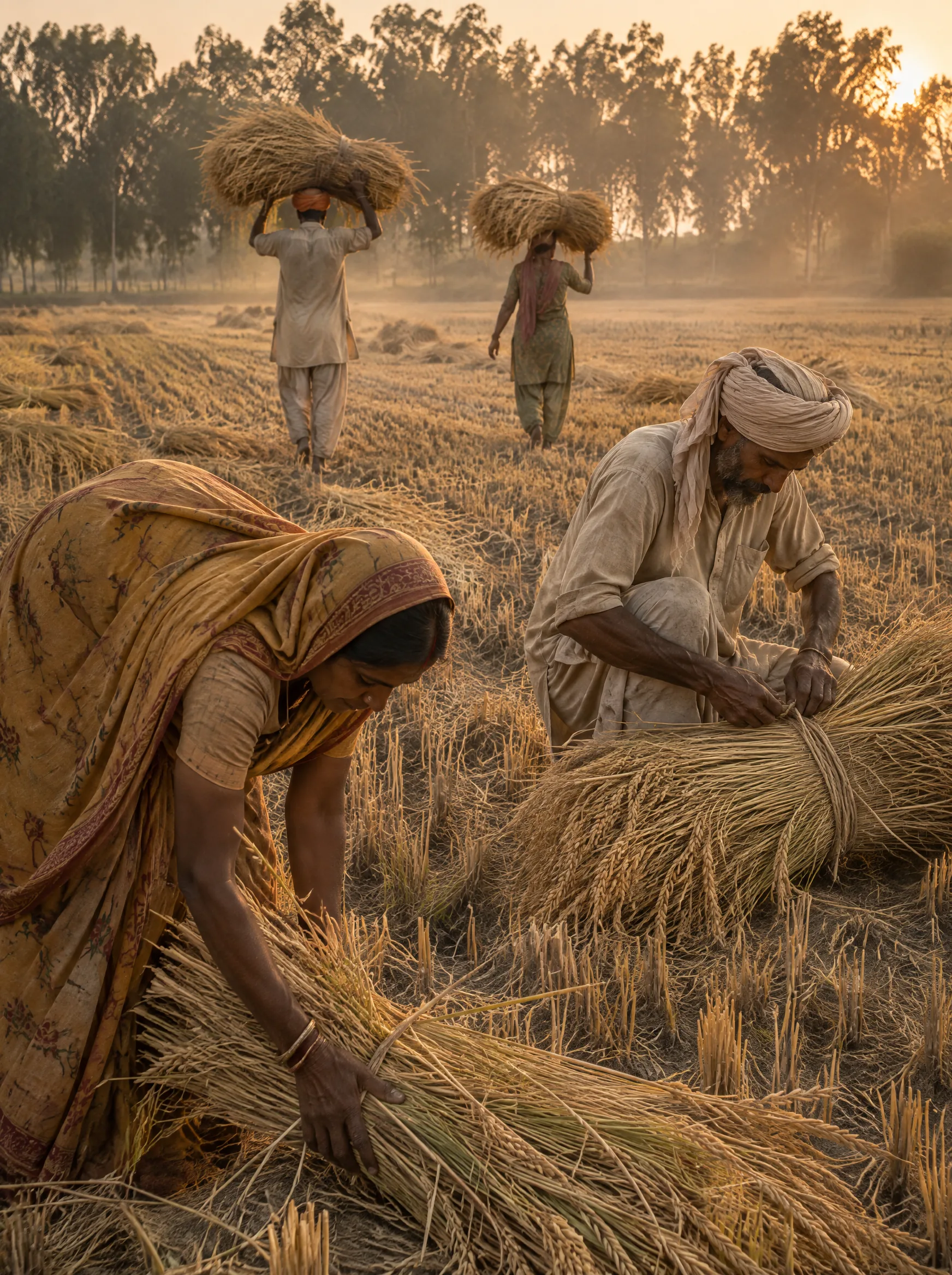
Farmers at work in a harvested rice field at golden hour: in front, a woman in a saffron sari and a man in a pale turban bundle cut stalks into sheaves; behind them, two more carry sheaves on their heads.
Fig. 6 Bundling the harvest by hand. What is left standing in the field still has to be cleared — fast.

Chapter II  ·  Why they burn

Not carelessness. Debt.

Farmers are burning their crops out of economic desperation.

Most begin the season in debt. Seeds, fertilizer and equipment are paid for only after the harvest is sold. When the season ends there is no time and no money for complex solutions — so burning the leftover waste is simply the cheapest, fastest option.

Any answer has to start from that ledger. It cannot ask for money the farmer doesn’t have or time they can’t spare. ReLife’s insight is to turn the waste into a resource the farmer gains from.

Fig. 7 The season, as a ledger
  1. Seedspaid after harvest
  2. Fertilizerpaid after harvest
  3. Equipmentpaid after harvest
  4. Time to clear the fieldnone
  5. Money for complex solutionsnone
  6. Cheapest, fastest optionfire

When the season ends there is no time and no money for complex solutions.

Aerial view of farmland split by a dirt road: on one side, blackened plots still smoking; on the other, rows of bright green crops. A tractor drives along the road between them.
Fig. 8 Burnt plots and green plots, either side of one road.

The turn

What if the waste were worth more than the match?

ReLife’s insight: turn the waste into a resource the farmer gains from. Then nobody has to be persuaded not to burn it.

Chapter III  ·  The machine

Mobile. Simple. Operated by the farmer.

One load of waste goes in and is split into two streams. Part is burned as fuel. The rest is heated — sealed off from the air — until it becomes biochar.

The machine is fuelled by the very waste it processes. And unlike existing biochar machines, which often need an outside operator, it is simple enough for the farmer to run alone — when and where it suits them.

  1. 1

    Biochar feed

    Waste dropped here is the batch that will become biochar. It falls into the inner tube.

  2. 2

    Fuel feed

    Waste dropped here is burned. It falls to the fire and heats the machine.

  3. 3

    Air injection turbo engine

    A blower forces air into the fire so it burns hot and clean.

  4. 4

    Fire chamber

    The fire burns directly beneath the tube and heats it from outside.

  5. 5

    Pyrolysis tube

    Heated with almost no oxygen, the waste inside cannot burn. It chars into biochar.

  6. 6

    Protective tube

    A heat-insulated sleeve keeps the heat in and the machine safe to stand beside.

  7. 7

    Biochar outlet

    The tube bends down and the finished biochar drops out.

ReLife biochar machine, side elevation Line drawing of the machine from the side. At the left, a blower (3) forces air into a fire chamber (4). Two vertical feed pipes with funnels rise above it: a short one at the left, the biochar feed (1), and a tall one in the middle, the fuel feed (2), which drops waste down to the fire. A horizontal pyrolysis tube (5) runs above the fire, passes through an insulated protective sleeve (6), then bends down at the right into the biochar outlet (7), where finished biochar falls onto a small pile. H₂O N P 1 2 3 4 5 6 7
Fig. 9 — The machine, side elevation, with parts numbered 1 to 7 as in the key.
A strip laid out on the page: golden rice straw on the left gradually darkens and chars, ending as black chunks of biochar on the right.
Fig. 10 What happens inside the tube, laid out left to right: the batch goes in as straw and comes out as biochar. Illustrative.
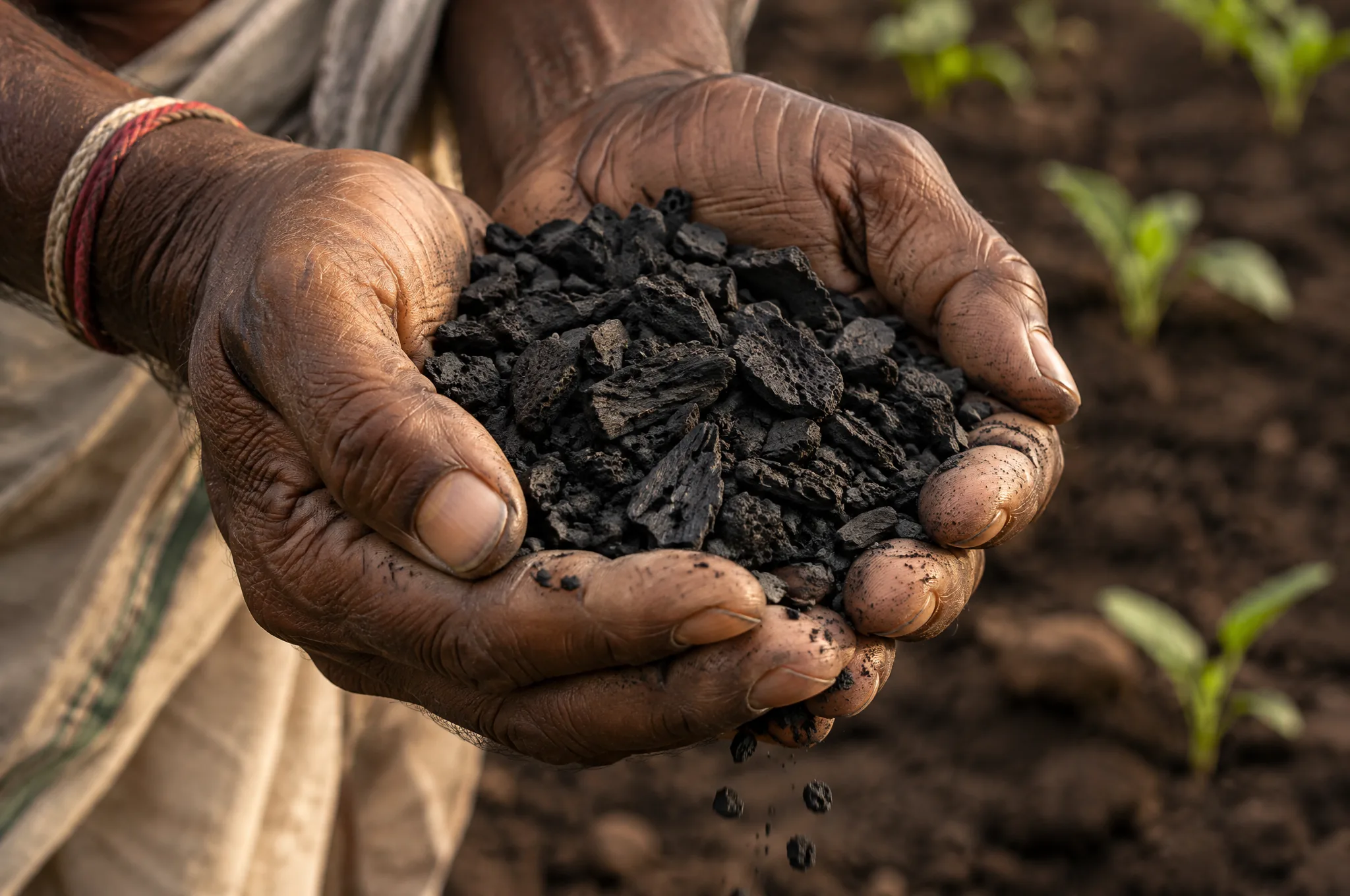
Weathered hands cupping a heap of black, chunky biochar over dark tilled soil, with young seedlings behind.
Fig. 11 Biochar, ready to be worked back into the field it came from.

Chapter IV  ·  What biochar does

From the field, back to the field.

Biochar is a high-quality soil amendment. Worked into the ground, it improves the soil, retains water and nutrients, and reduces the need for fertilizer.

That is the fertilizer the farmer buys on credit at the start of every season. The waste stops being a problem to burn and becomes something the farmer gains from.

Notes

Biochar is charcoal made for the soil. Plant material — here, the crop waste left after harvest — is heated with almost no oxygen, so instead of burning away it turns into a stable, black, porous solid.

Worked into a field, it improves the soil, retains water and nutrients, and reduces the need for fertilizer.

Pyrolysis is heating without air. With almost no oxygen, plant matter cannot catch fire; it breaks down and chars instead.

In ReLife’s machine this happens inside the pyrolysis tube — part 5 of Plate I — heated from outside by a fire that burns the other part of the same load of waste.

Biochar holds water (H₂O) and nutrients such as nitrogen (N) and phosphorus (P) in the soil, where roots can reach them, and it gives soil microbes a place to live.

Nutrients that stay in the soil are nutrients the farmer does not have to buy again as fertilizer — the same fertilizer that is bought on credit at the start of the season.

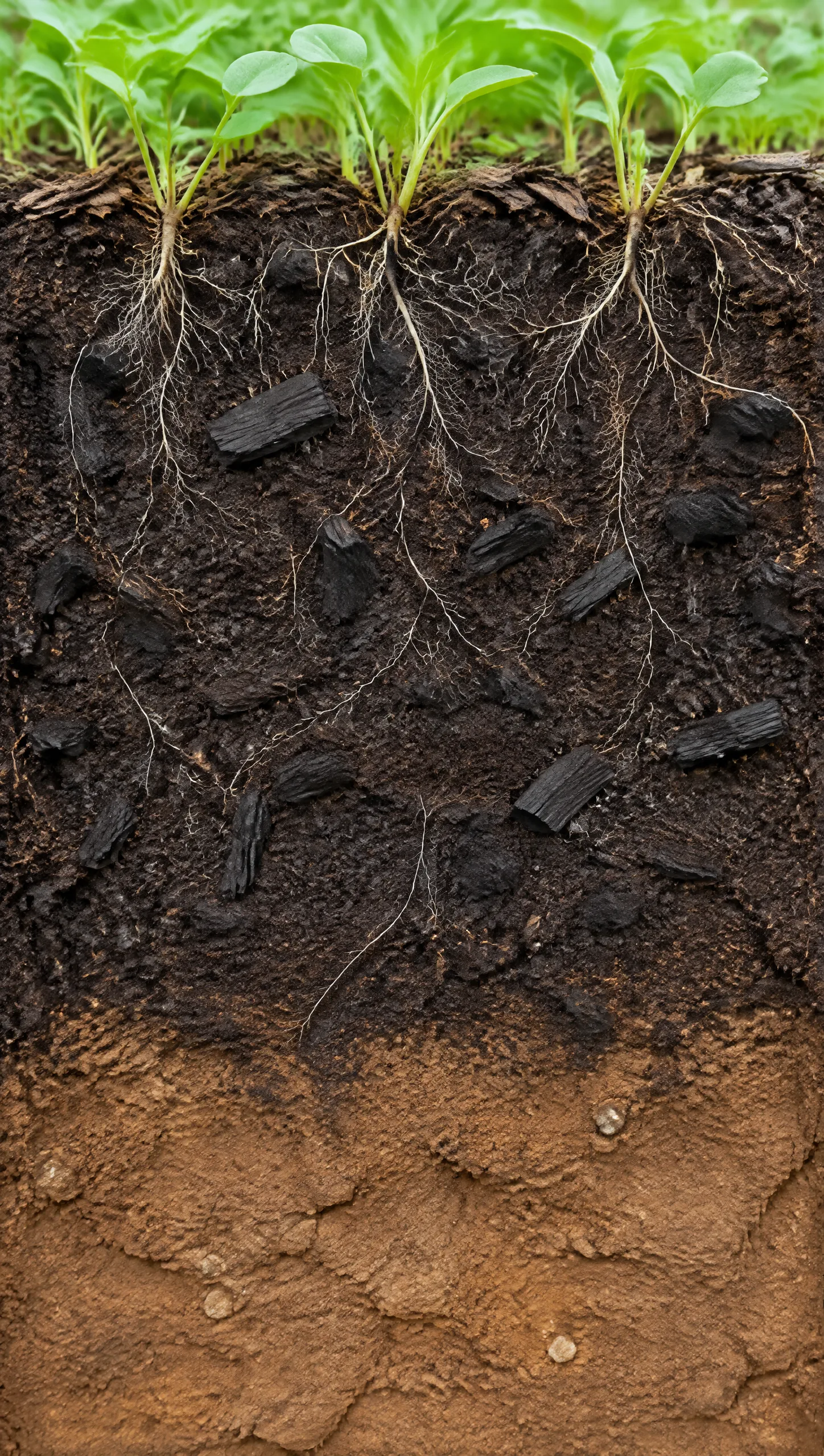
Cross-section of soil: green seedlings on top, their roots reaching into dark soil studded with black biochar pieces, above a layer of lighter brown subsoil.
  1. a

    Seedlings

    Roots reaching down into the dark, biochar-rich layer.

  2. b

    Soil with biochar

    Biochar holds water H₂O and nutrients N P in the soil, and hosts soil microbes.

  3. c

    Subsoil

    The lighter layer beneath.

Fig. 12 Soil section, illustrative.

Two things at once

It saves farmers money on fertilizer.

And it saves lives.

Chapter V  ·  Who pays

The farmer doesn’t.

ReLife’s customers are governments and NGOs — the people already investing in rural agriculture, pollution prevention, farmer‑support programs and sustainable villages.

How ReLife is funded
No.StreamHow it worksIn short
01 Funded by partners Governments and NGOs purchase the machines; farmers operate them independently. So the solution reaches farmers who could never afford it. B2G2C · B2B2C
Who buys
Governments and NGOs. They already invest in rural agriculture — developing rural farming communities; in pollution prevention — especially smoke from burning agricultural waste; in farmer support — programs that help farmers stay afloat financially; and in sustainable villages — environmental solutions deployed directly in villages.
Who runs it
The farmer, independently. No outside operator.
Why this way
Farmers begin the season in debt and cannot buy a machine. So the institutions that already pay for the damage of burning fund the alternative.
What the farmer gets
A cleared field without fire, and biochar for their own soil — less fertilizer to buy.
02 Carbon credits Earned on the emissions the machine avoids — subject to proven emission reductions. $100–$200per ton of CO₂
The idea
Burning sends the carbon in crop waste into the air as CO₂ and smoke. Pyrolysis keeps much of that carbon in a solid — biochar — that goes back into the soil.
What a credit is
A carbon credit represents one ton of CO₂ kept out of the atmosphere. It only exists once the reduction has been measured and verified.
ReLife’s estimate
$100–$200 per ton of CO₂, subject to proven emission reductions — revenue that has to be earned in the field, not assumed.
03 Selling the machines Local production, through a factory ReLife will establish in India. Made in India, planned
Where they’re made
Local production through a factory ReLife will establish in India, close to the farmers who use them.
Estimated cost
About ₪30K per machine, built in India.
Goal
100 machines deployed in the first year after the prototype is completed.
Status today
Prototype stage.
04 Design licensing Licensing the mechanical designs to partners. Designs, licensed
What it is
Licensing the mechanical designs to partners, so machines can be built by others where they are needed.
Reach
India first; the ambition is farmers worldwide.

Estimates & goals

About 30,000 shekels

Estimated production cost per machine, built in India.

100

Machines deployed in the first year after the prototype is completed — the goal.

Fig. 13 Sustainable agriculture, market size — ReLife’s estimate
  • $95BIndia
  • $190BEast Asia
  • $280BGlobal South

Chapter VI  ·  Three years in

Three years of research, testing and partnerships.

ReLife’s own photographs — the conversations, the visits and the first tests behind the prototype.

01Listening first — talking with farmers in a banana grove.
02Expert validation, at the Zuckerberg Institute for Water Research.
03Working with an engineer on the design.
04In contact with India’s embassy.
05Partner: Israel’s Ministry of Agriculture and Food Security.
06A fundraising evening in the park.

Real-world tests. Real results.

07Proof of concept: the prototype’s pyrolysis tube.
08Field test, from above.
09Real biochar, produced.

2nd

place in Unistream’s Venture of the Year competition — two years in a row.

Where it began

ReLife started inside Unistream, a nonprofit that helps young people build startups.

It placed second in the program’s second and third years. When the program ended, the team decided to keep going — and take it into the real world.

The program
Unistream, a nonprofit that helps young people build startups. ReLife was founded inside it.
The competition
Venture of the Year. ReLife took second place in the program’s second year — and second place again in its third.
After
The program ended; ReLife didn’t. The team decided to keep going and take it into the real world — the conversations, partnerships and tests on this page.

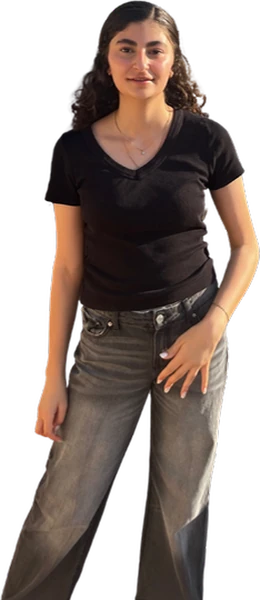
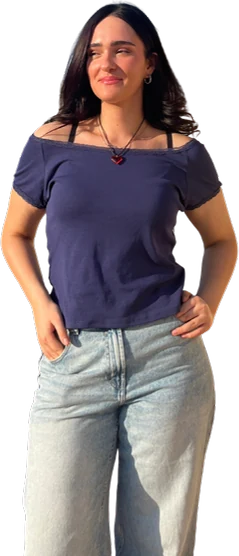
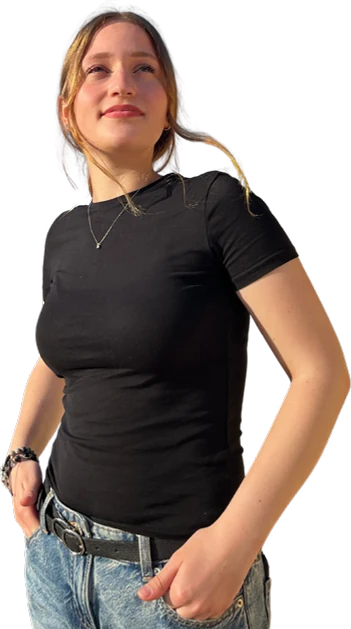
The team

The people who kept going.

  • Tzur

    Tzur

  • Reaya

    Reaya

  • Yaara Rotem, Chief Executive Officer

    Yaara RotemChief Executive Officer

  • Yonathan

    Yonathan

  • Angelina

    Angelina

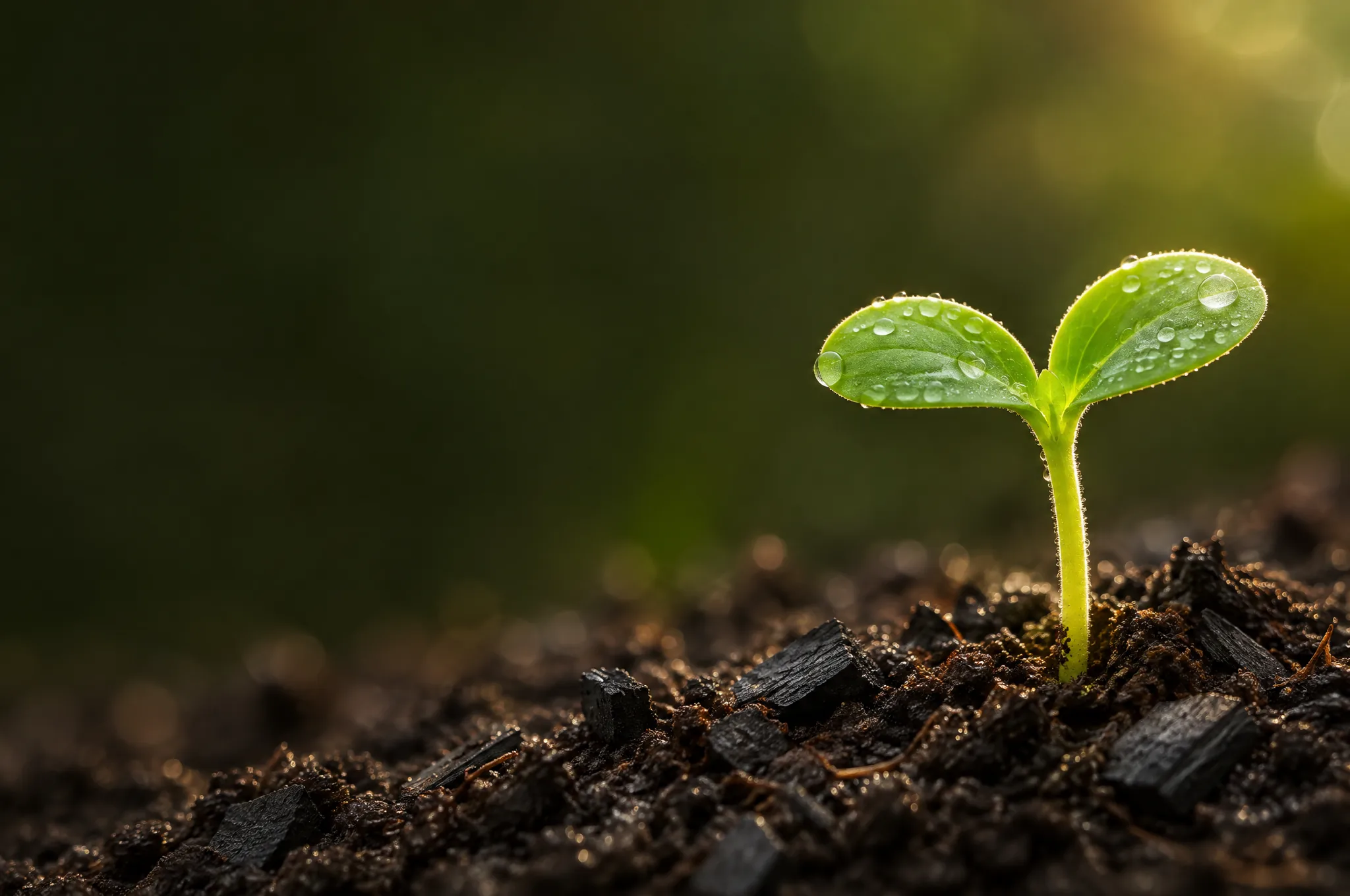
A single seedling with two dewy leaves rising from dark soil mixed with pieces of biochar, lit by morning sun.

Partner with us

Pilots come next.

The goal

100 machines

in farmers’ hands in the first year after the prototype is completed.

Reply card

For governments, NGOs, impact investors and partners who could fund a pilot.

Received

Thank you. Your card is with us — we’ll be in touch.

Three years in · Frame 01

Photograph from ReLife’s own archive.